Rebar Identificationin Dubai
Overview
Know exactly where the steel is before you cut
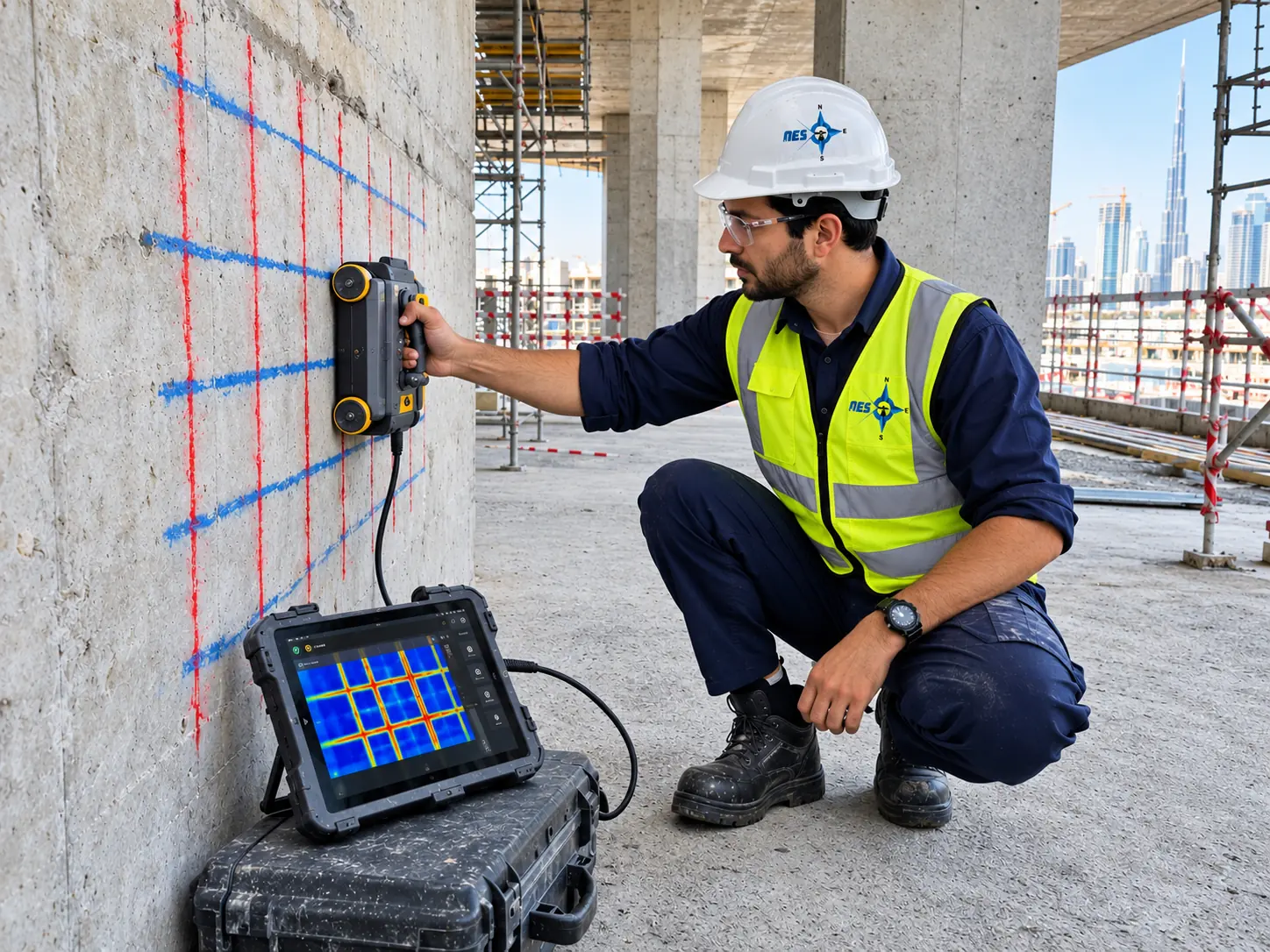
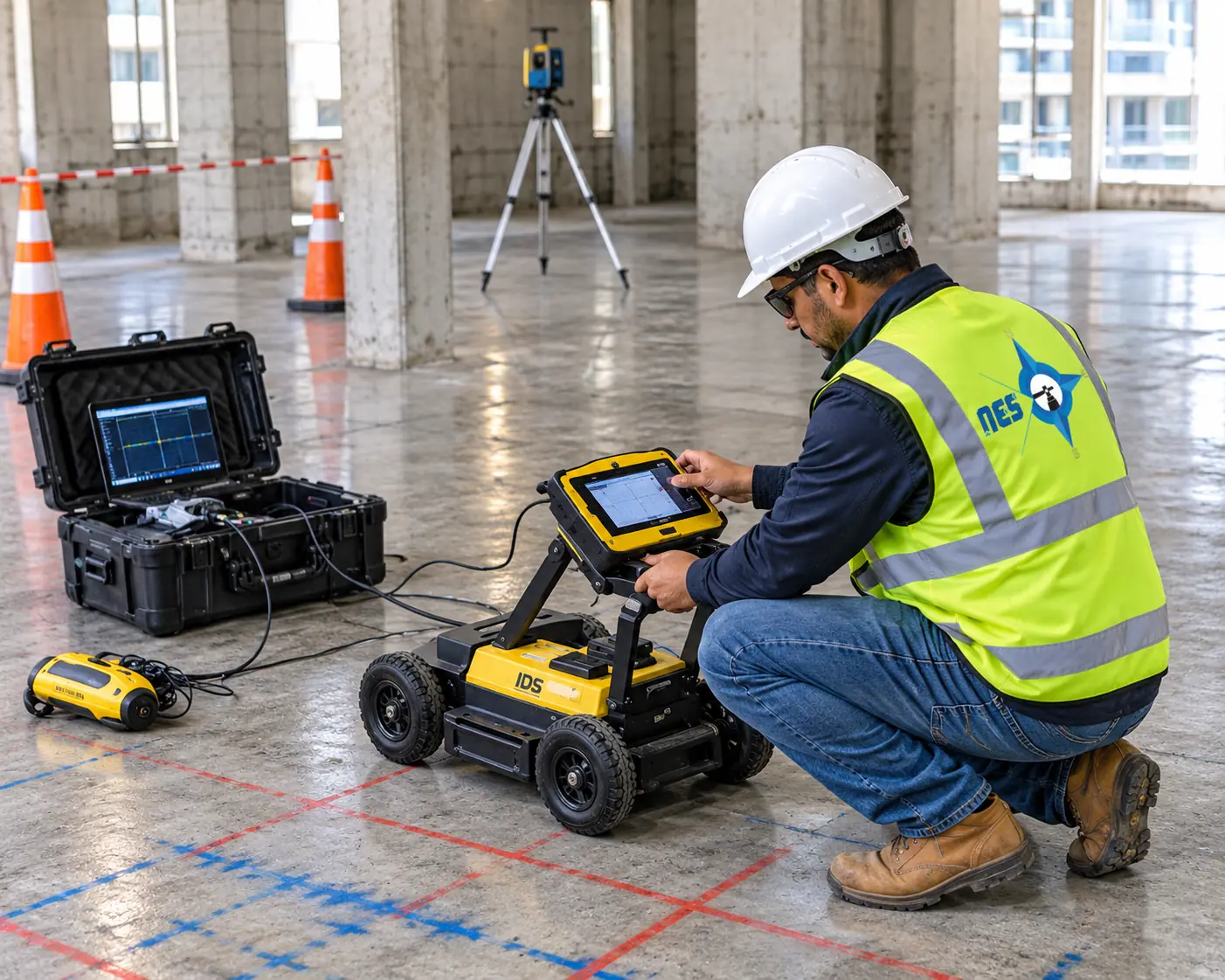
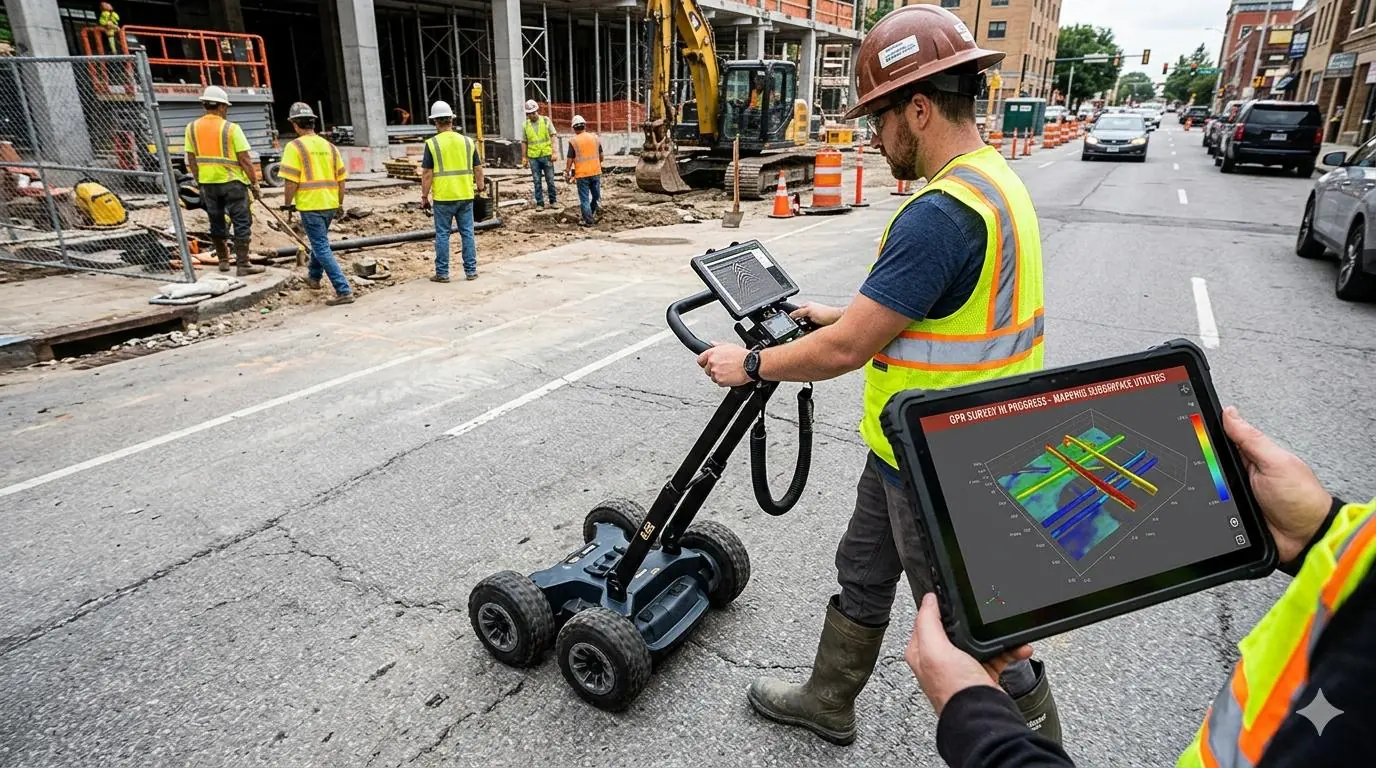
Rebar identification is the first step before coring, cutting or drilling into reinforced concrete. NES uses ground penetrating radar to find the steel bars, electrical conduits and post-tension cables inside your slab, beam or wall, and marks them clearly on the surface.
NES uses ground penetrating radar to locate reinforcement bars, conduits and post-tension cables inside slabs, beams and walls. We mark the results directly on the concrete and issue a clear report, so coring, cutting and fixing can go ahead without hitting steel.
- Coring & drilling
- Slab openings
- Anchor fixing
- Structural assessment
- Retrofit works
What we capture
What rebar identification maps
Bar layout
Top and bottom layers and their spacing.
Cover
Depth from the surface to the steel.
Safe zones
Marked areas clear for coring and drilling.
Embedded items
Conduits and cables near the steel.
Marked report
Photos and a drawing of what was found.
Deliverables
What you receive
- Marked-up concreteSafe zones and no-go lines painted on site.
- Scan report (PDF)Scan locations, findings and photographs.
- Sketch planBar and service layout per scanned area.
- Core point adviceRecommended positions for coring or fixing.
Scan first, cut second. Underground services outside the building are covered by our utility survey.
Radar scanning that locates rebar, cables and conduits in concrete before you core, cut or drill.
Our operators scan from one face of the concrete, mark safe zones, and give you a short report with photographs. Whether you are opening a slab for a new riser, fixing heavy anchors or checking cover depth, you know what sits inside the concrete before the tool touches it.
Rebar identification works together with our concrete scanning, utility survey and as-built services. Book it with a Dubai-based team that works on live sites every day, with our own instruments and trained operators.
Process
How a NES survey runs
From your first message to signed drawings, in five steps.
- 01
Brief & quote
Send the site and purpose. We confirm scope, time and price.
- 02
Control set-up
Control points fixed with RTK GPS, so everything ties together.
- 03
Field survey
Our crew measures with the instruments that fit the site.
- 04
Processing & CAD
Engineers process the data; drafting builds the drawing.
- 05
Check & deliver
Independent check against control, then your files.
Why choose NES for rebar identification in dubai
High-precision instruments
Our own total stations, GPS and scanners for fast, accurate measurements.
Survey & CAD under one roof
Integrated surveying and drafting keeps data consistent.
Proven track record
250 major projects for authorities, developers and contractors.
Built around your project
Scope tailored to site planning, authority and municipal needs.
FAQ
Frequently asked questions
How deep can the scanner see?
Depth depends on the concrete and the antenna used. We choose the equipment on site to suit the slab you need to scan.
Can you scan a slab from one side only?
Yes. Scanning is done from one face, so you only need access to the surface you plan to cut or drill.
Does scanning damage the concrete?
No. It is non-destructive and the area can be used straight away.
Is this the same as concrete scanning?
Rebar identification is the main use of concrete scanning. We also map cables and voids in the same visit.
Does rebar scanning damage the concrete?
No. Scanning is non-destructive, so nothing is drilled or opened.
Related services
Often booked together
Get a quote
Request rebar identification in dubai
Share the site location, size and what the survey is for. A surveyor will reply with scope, timing and price.